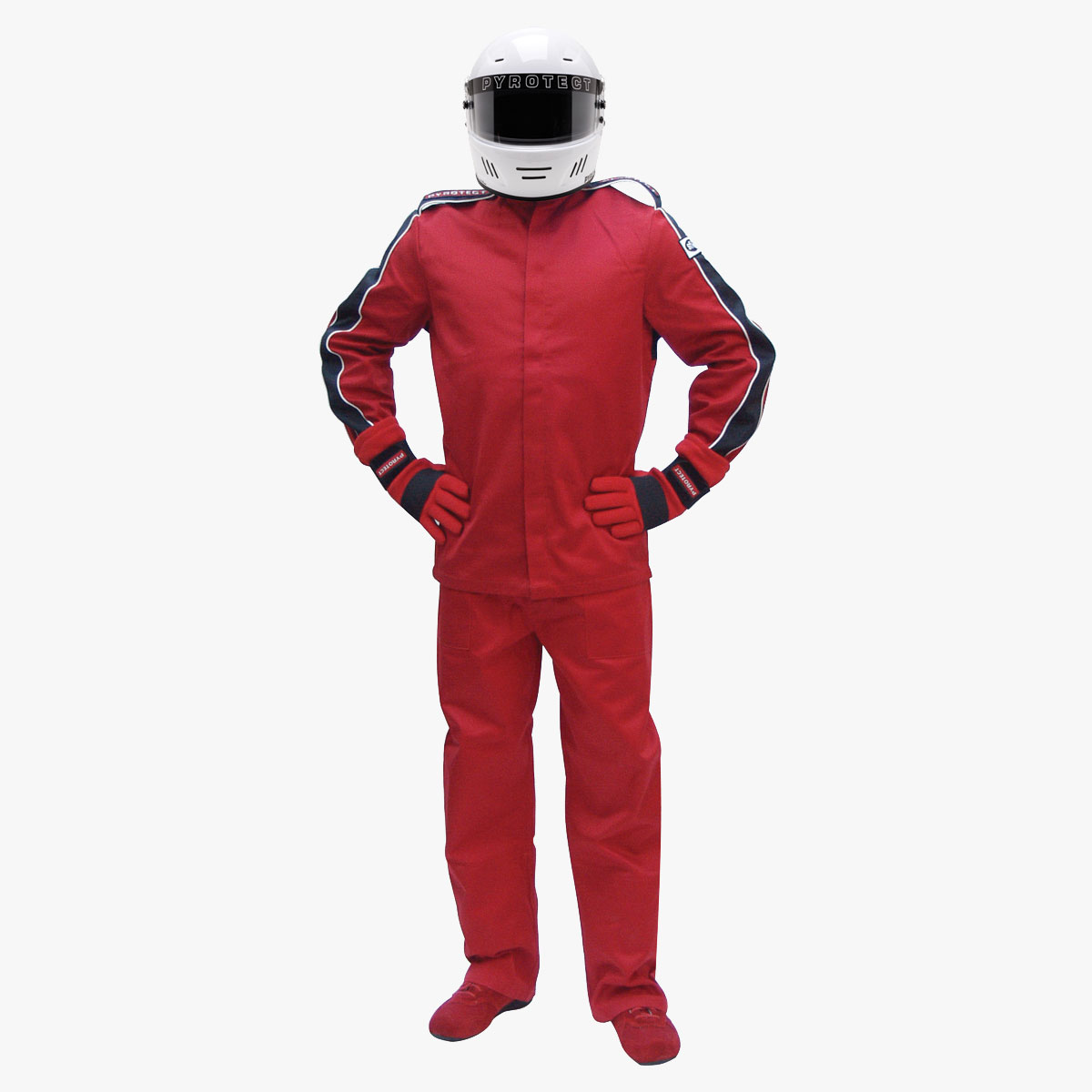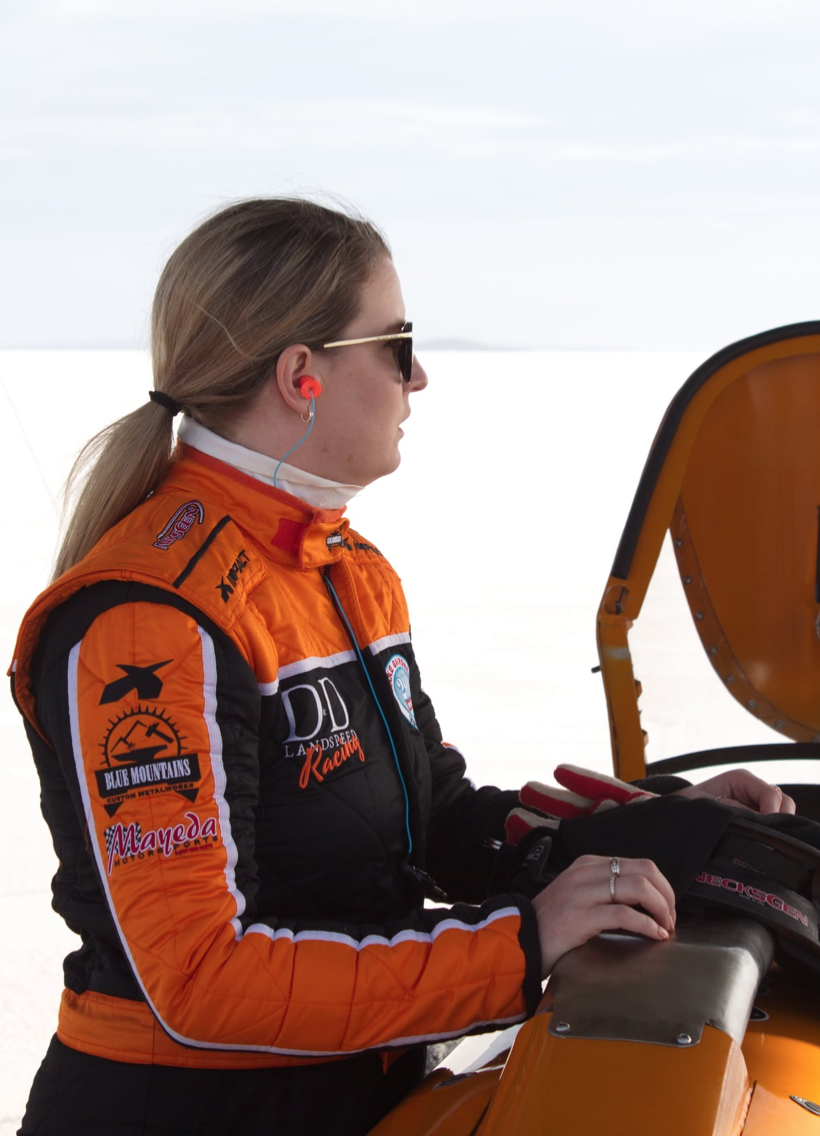
Your driver suit is your ultimate line of defense in a cockpit fire. But what do those SFI and FIA rating patches actually mean?

It comes down to layers, TPP (Thermal Protective Performance) scores, and time—specifically, how many seconds of protection you have before experiencing a second-degree burn. 

Here is a quick overview to help you choose the appropriate suit and rating:

SFI Ratings (The Drag & Domestic Standards)

SFI ratings are the benchmark for North American racing, built to handle intense fuel and alcohol fires.

  • SFI 3.2A/5: Features 2–3 layers, providing ~9.5 seconds of protection. Perfect for bracket racing, autocross, and grassroots circle track. Lightweight, mobile, and budget-friendly!
  • SFI 3.2A/15:  Heavy multi-layer tech designed for 30 seconds of escape time. A must-have for Top Sportsman, Pro Mod, and fuel classes.
  • SFI 3.2A/20:  Designed for the extreme racing, including Top Fuel and Funny Car, delivering 40 seconds of critical protection against intense thermal energy.

FIA 8856-2018 (The Global Road Racing Standard)

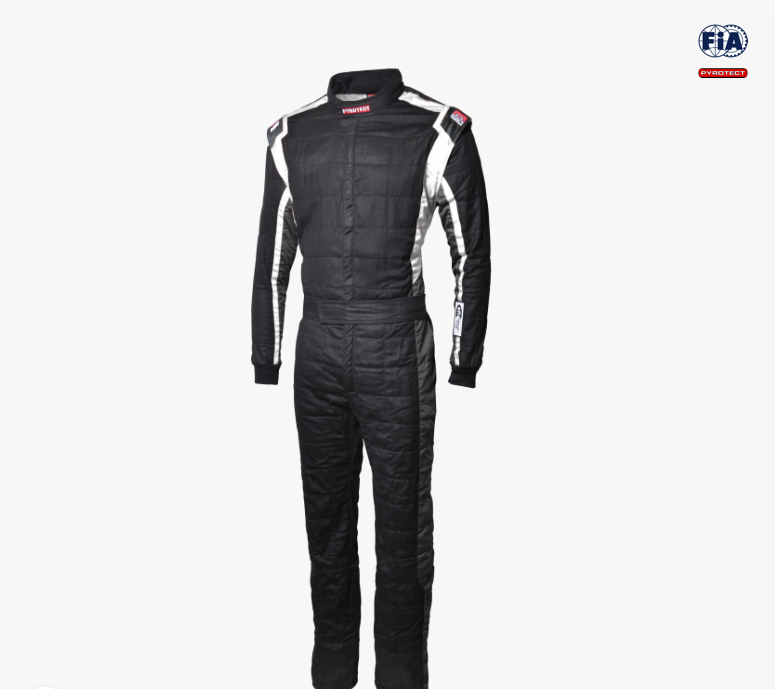
If your passion involves internationally recognized sports cars, open-wheel, or stage rally, you will want to look for the FIA hologram.

  • The Benefit: FIA-rated suits focus on fighting driver fatigue during long, grueling track sessions. They utilize cutting-edge, ultra-breathable, and lightweight fabrics that provide a minimum of 12 seconds of protection against both direct flame and radiant heat.

The Two-Piece vs. One-Piece Suit Dilemma

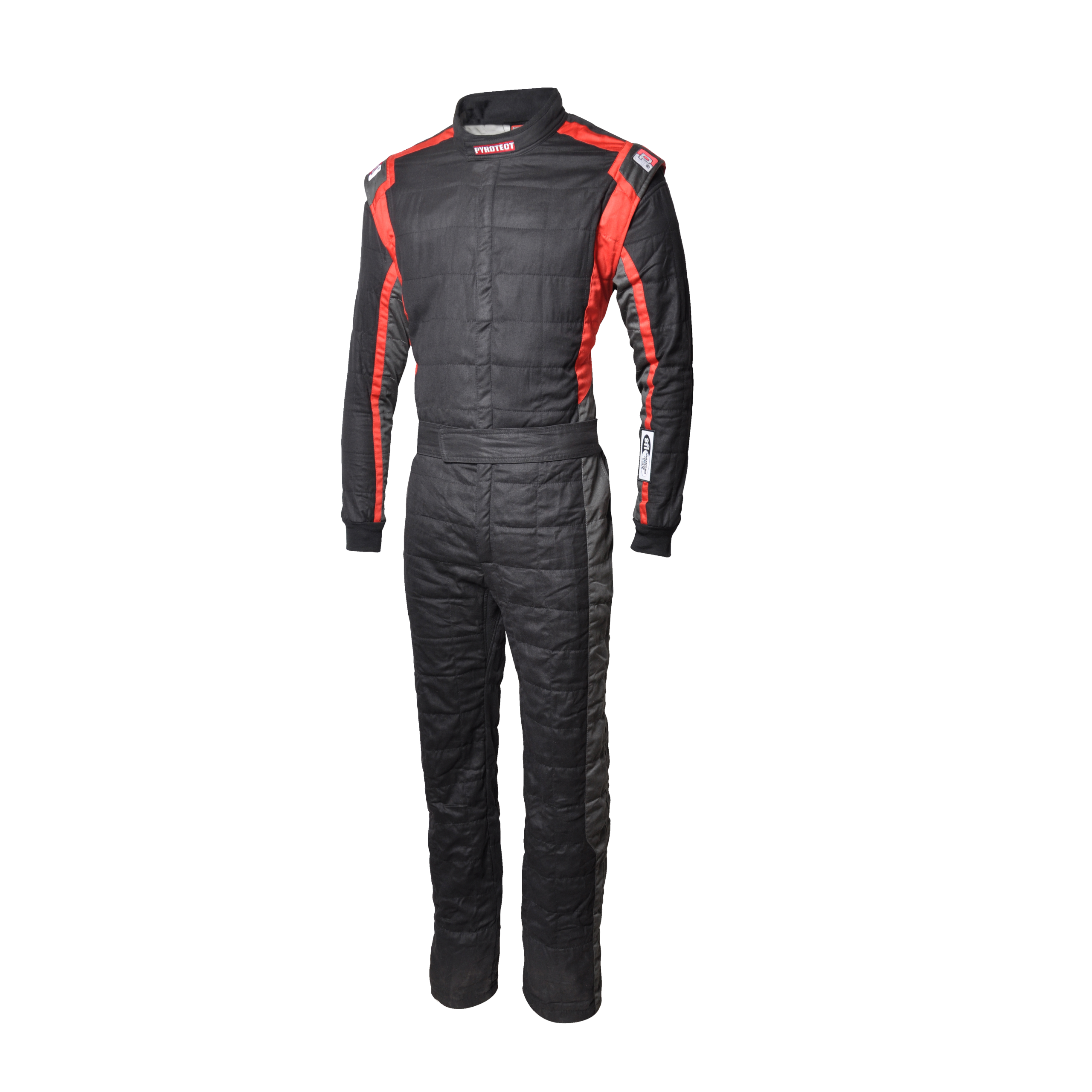
One-Piece Suits

  • The Pros: It offers a higher level of safety because there is less chance of the suit separating during an incident. Also, one-piece suits are mandated by many sanctioning bodies in the upper racing classes.
  • The Cons: Cost: unless you can get away with an off-the-shelf suit, a one-piece suit often requires a custom build and precise measurements and tailoring – about a 15-30% price premium. And they are not as forgiving when gaining or losing weight. They can be less convenient, especially during hot days. 

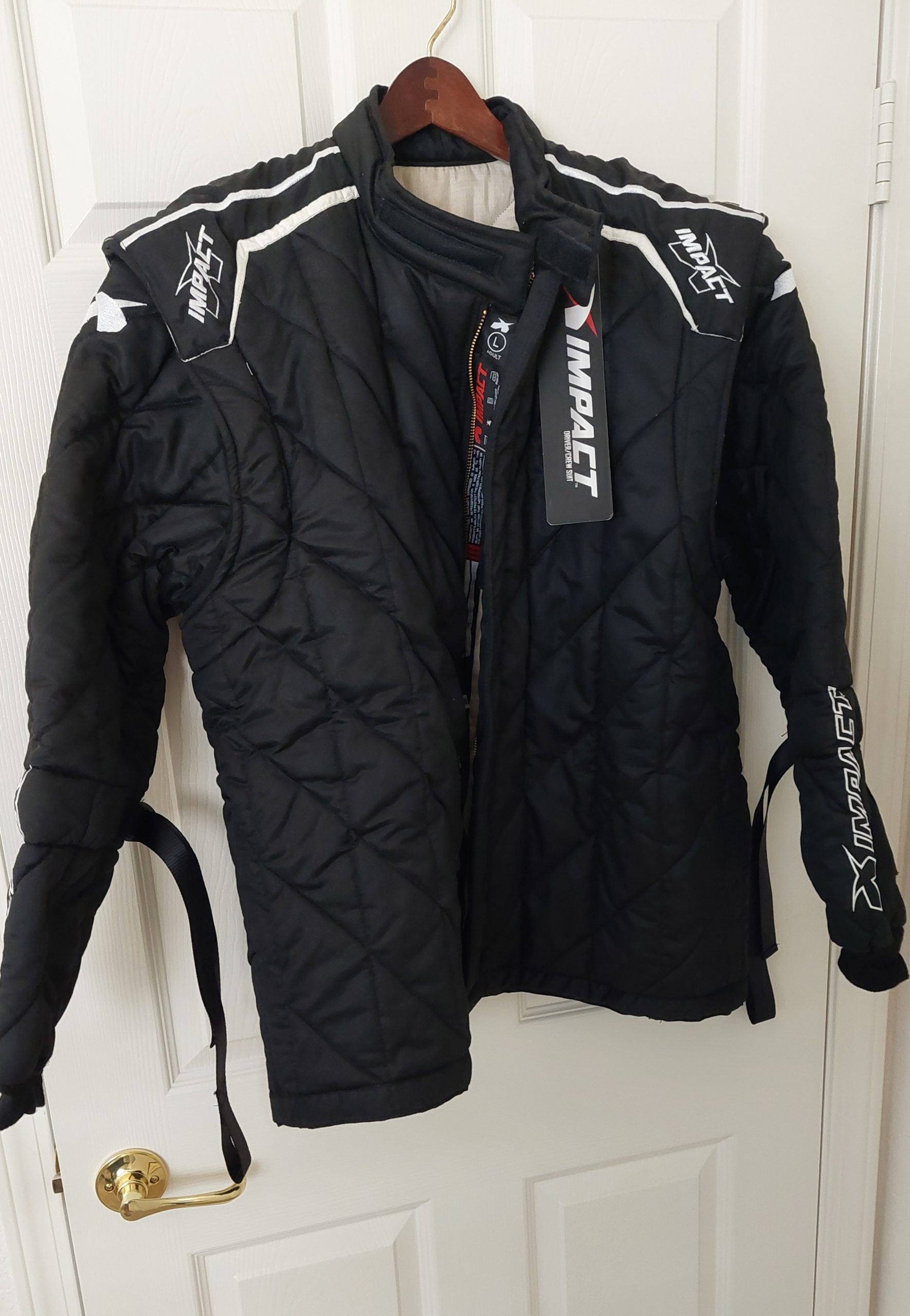
Two-piece suits consist of a separate jacket and pants that overlap at the waist.

  • The Pros: They offer unmatched convenience and fit flexibility. You can easily remove your jacket between rounds to work on the car or grab a drink. Cost: mix and match jacket and pant sizes are better for a custom fit without the custom price. Two-piece suits tend to be around 15-30% less in price.
  • The Cons: The overlap at the waist is a potential vulnerability. If you have to extract from a tight cockpit or end up upside down, the jacket can ride up and expose your midsection. As a result, many sanctioning bodies have mandated one-piece suits over two-piece suits in certain racing classes.

Pro Tip Before You Buy

Always check your specific sanctioning body’s rulebook first or contact us! Beyond the rules, buy the absolute best protection your budget allows.

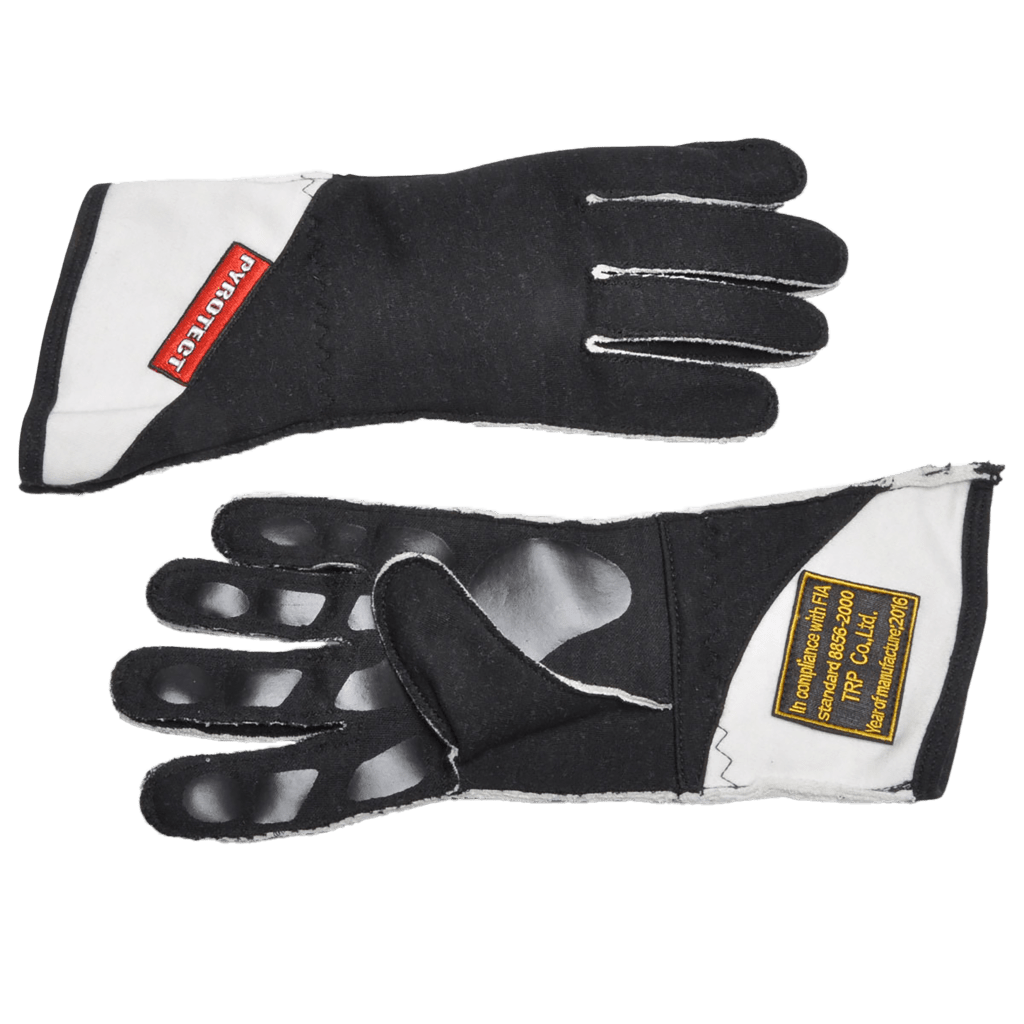
At Mayeda Motorsports, we encourage racers treat safety gear more than a compliance checklist. In a vehicle fire, your hands are your most vulnerable assets to manipulate the controls and extricate yourself quickly.

Here is why investing in premium, high-rated gloves is a necessity for every racer:

SFI & FIA Ratings

  • Certified protection: SFI and FIA ratings guarantee materials comply with and pass strict laboratory flame resistance tests
  • TPP breakdown: Thermal Protective Performance tests measure exactly how long a fabric resists blistering heat, protecting your skin
  • Counterfeit danger: Cheap, unrated knockoffs melt directly into the skin during a fire

Why You Should Exceed the Rulebook

  • Rules are minimums: Race series rules state the baseline protection required, not the maximum safety available.
  • Buying time: Higher-rated gloves feature advanced, multi-layer aramid fabrics that buy you crucial extra seconds in the event of a fire
  • The escape-time window: Those extra seconds mean the difference between unbuckling safely or suffering life-altering burns
  • Smart upgrade: If your class requires an SFI-3.3/1 glove, upgrading to an SFI-3.3/5 gives you significantly more protection and time

Gearing Up? We’re Here to Help

Do not compromise on the tools you use to steer, shift, and win. Invest in the highest level of protection your budget allows. We’re here to help you with access to the most cost-effective SFI- and FIA-rated racer safety systems. For more info, visit: https://mayedamotorsports.com/product-category/gloves/

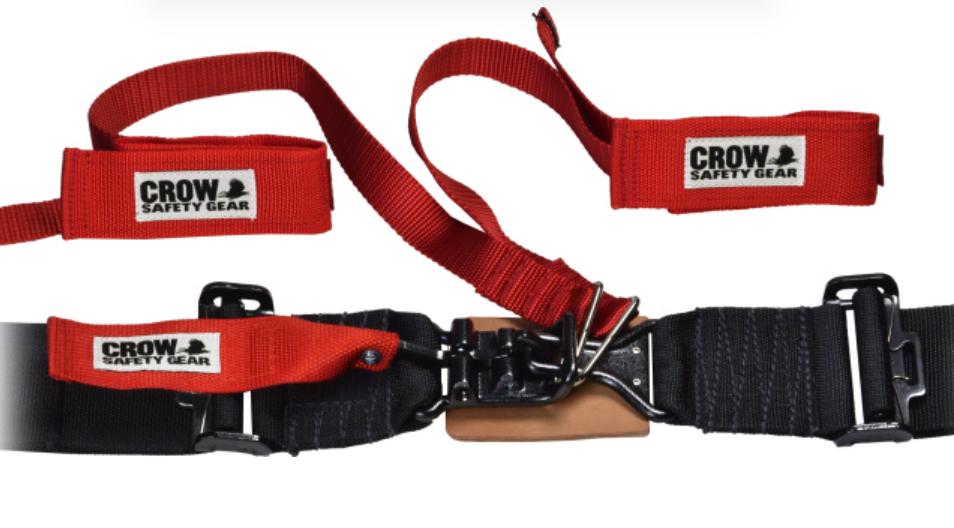
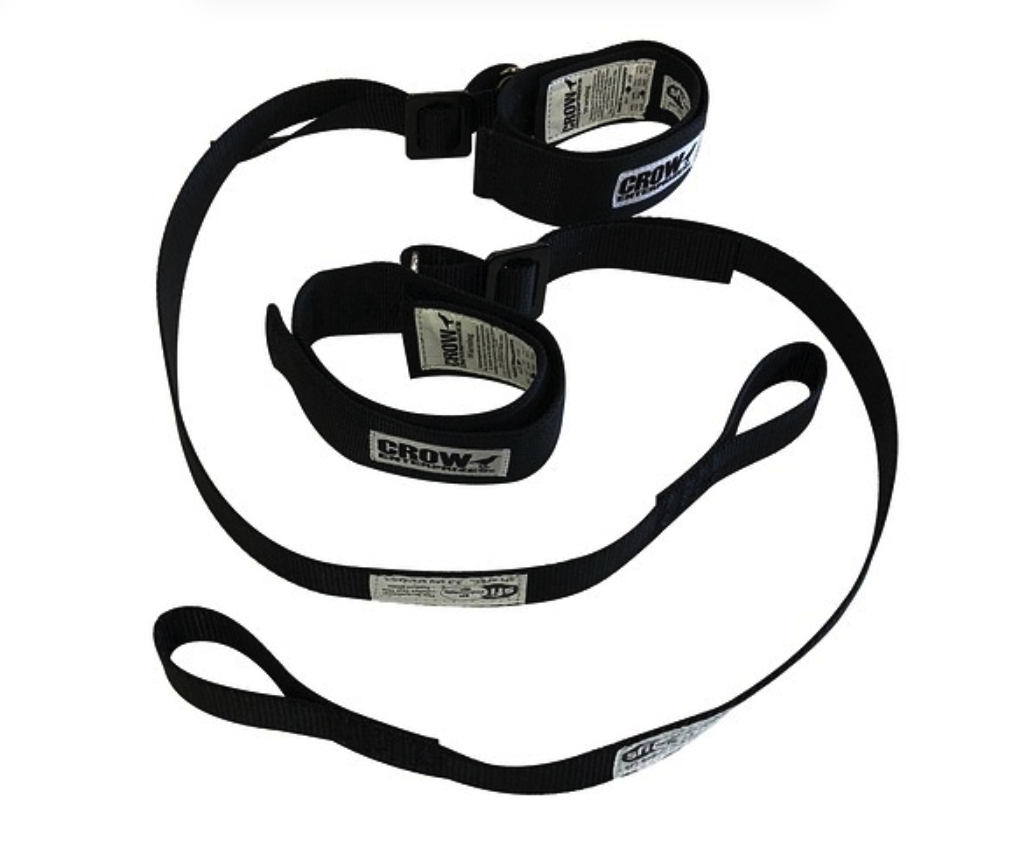
Arm restraints are a critical piece of personal safety gear, designed to keep a driver’s hands and forearms inside the cockpit during crashes or rollovers. They prevent severe injuries that can occur to your hands and arms through an open cockpit, window opening, or during violent lateral movement. Their importance is widely recognized across sanctioning bodies, many of which mandate their use.

Why Arm Restraints Matter

Arm restraints limit a driver’s arms from extending outside of the roll cage during an impact, reducing the risk of fractures, dislocations, or being struck by debris. They also complement other containment systems such as window nets and driver-side nets. By ensuring the driver’s limbs remain within the protective structure of the car, nearly all racing body mandate them for protection in open-cockpit or high-speed applications.

Sanctioning Body Requirements

Different racing organizations specify when arm restraints are required, often depending on vehicle design and class:

Open-cockpit racing classes: A rule of thumb is that arm restraints are required because drivers are more exposed.

  • NHRA/IHRA: Mandates strict restraint systems in many categories, including updated multi-point harness requirements and fire-resistant coverings for belts in certain open-bodied vehicles. While these rules focus on harnesses, they reflect drag racing’s broader emphasis on containment and restraint systems, which includes arm restraints in applicable classes.
  • FIA and affiliated series: Require comprehensive restraint systems and cockpit containment. While arm restraints are not universally required across all FIA categories, their standards for lateral restraint—such as driver nets—highlight the importance of keeping limbs within the cockpit during side impacts.
  • SCTA / Bonneville Nationals Inc. (BNI): Arm restraints are required for all open‑cockpit vehicles and many enclosed vehicles where the driver’s arms could reach outside the roll cage during a spin or crash. This includes lakesters, streamliners, roadsters, and modified production classes. SCTA requires “SCTA-Approved” arm restraints. These restraints require a locking design and/or hardware.
  • ECTA (East Coast Timing Association): Requires arm restraints in open‑cockpit vehicles and strongly recommends them in enclosed vehicles where window nets are not present.
  • Loring Timing Association: Follows similar rules: open‑cockpit = mandatory arm restraints; enclosed vehicles must use either window nets or restraints depending on cockpit geometry.
  • SCORE International: Requires arm restraints for all vehicles without window nets or with open‑cockpit designs. Even in enclosed trucks, restraints may be required if the window net cannot fully contain the driver’s arms.
  • Best in the Desert (BITD): Mandates arm restraints for UTVs, buggies, and other open‑cockpit vehicles. Window nets are acceptable in closed‑cab trucks, but restraints are still recommended in high‑risk classes.
  • Ultra4 / King of the Hammers: Requires either window nets or arm restraints; open‑cockpit vehicles must use arm restraints without exception.

SFI Certification: Sanctioning bodies typically require restraints carrying an SFI 3.3 certification tag, ensuring the webbing and hardware meet rigorous motorsport fire and tensile strength standards. 
Y-Strap vs. Individual Straps: Y-straps offer highly restrictive safety best suited for off-road or dirt track racing. Individual dual-tether straps offer greater side-to-side movement for road, drag, and land speed racing where frequent controls or rapid steering wheel manipulation are required. 

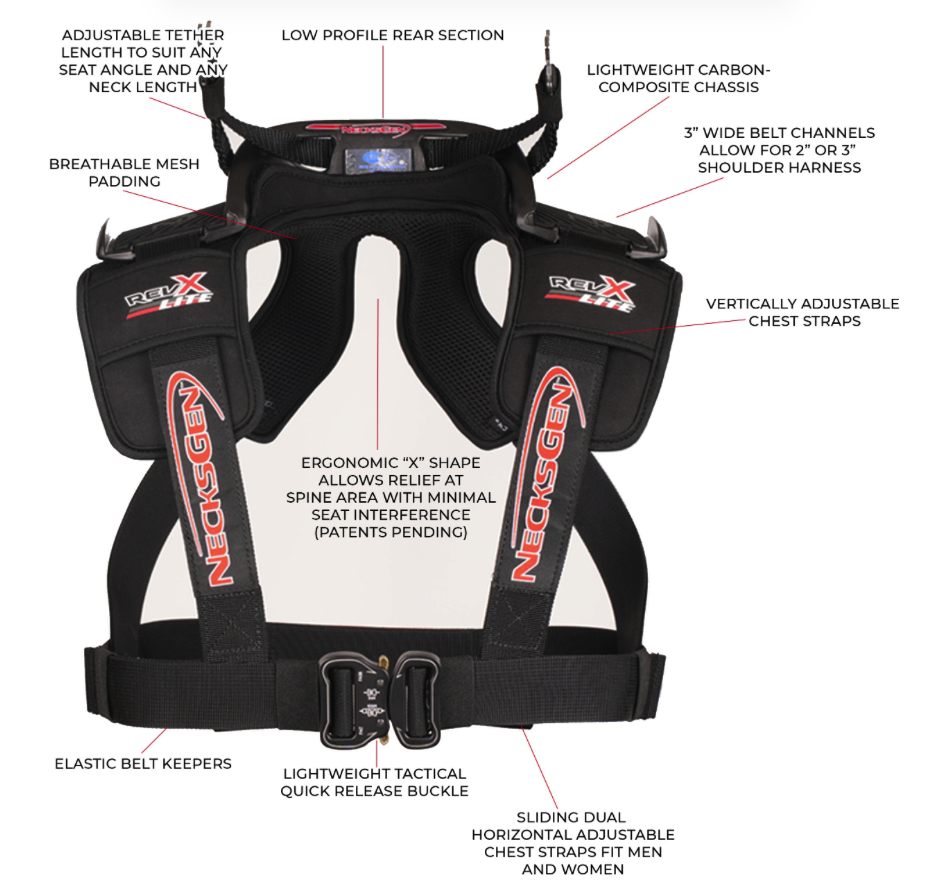
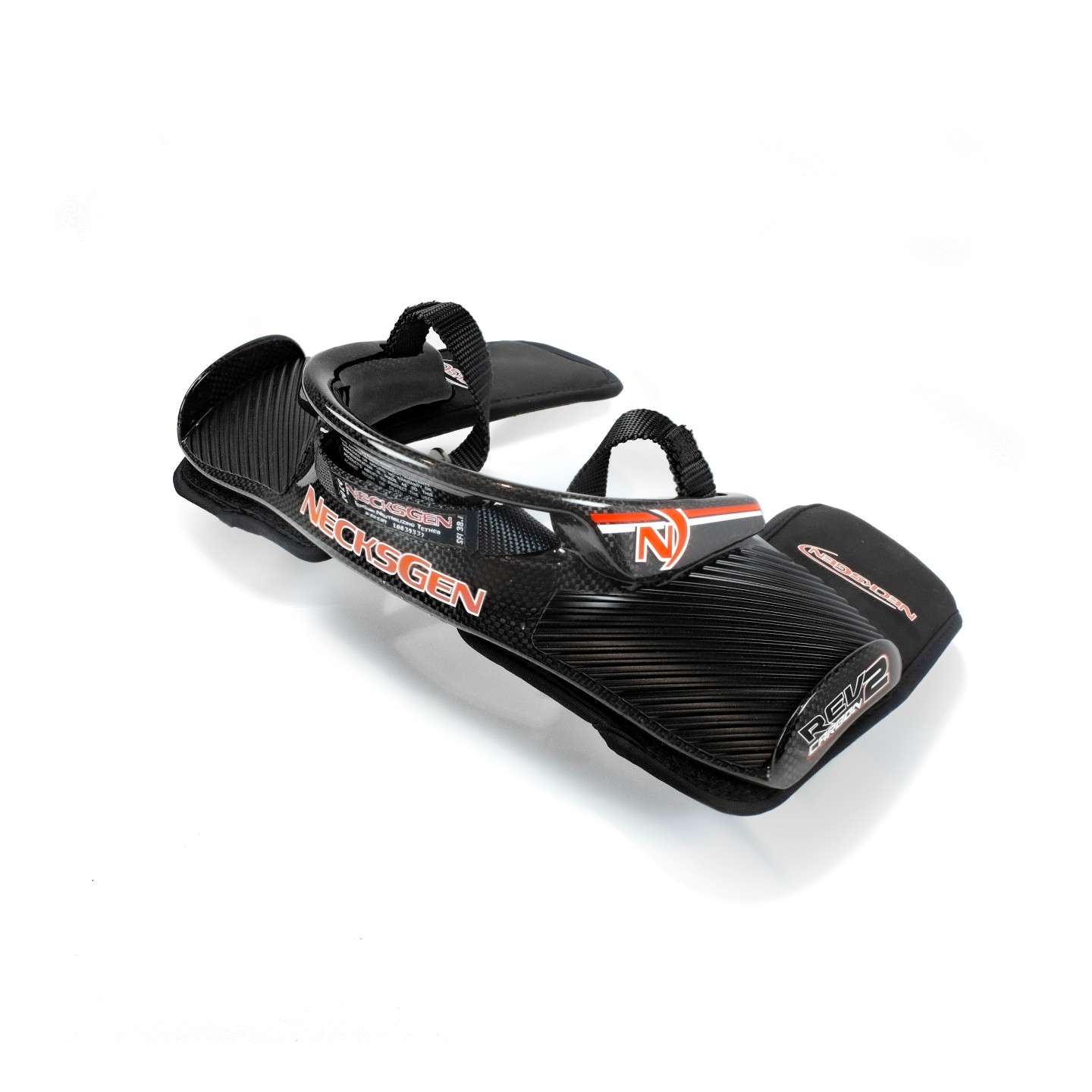
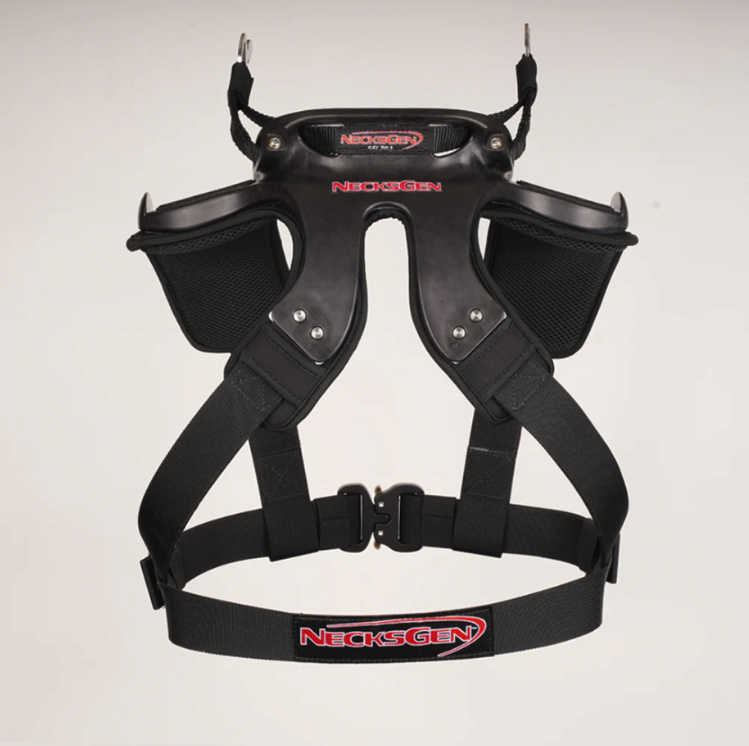
The newest head neck restraint from NecksGen is available!

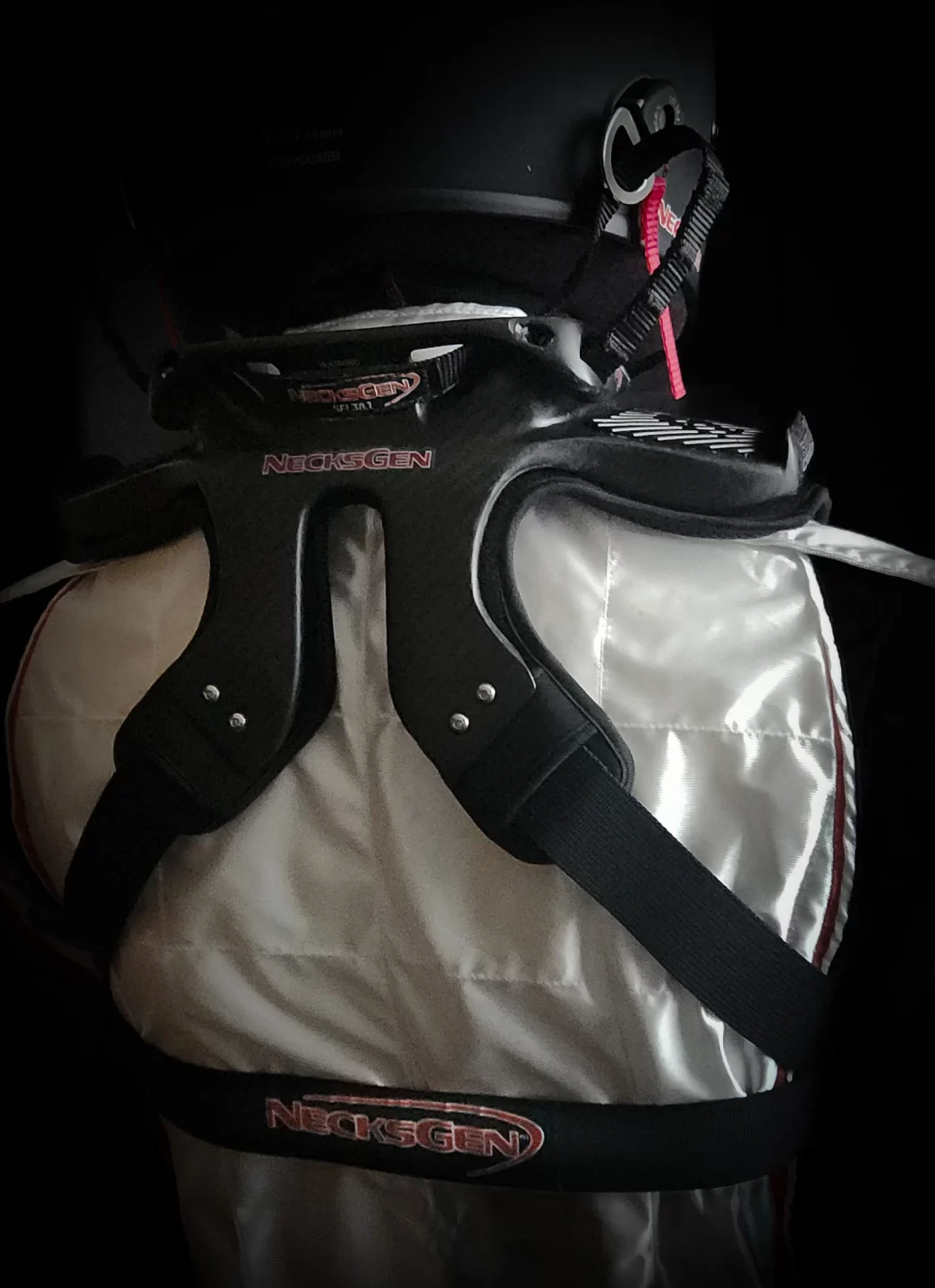
The REV X Lite is NecksGen’s newest style of head and neck restraint / frontal head restraint. It’s Made in the USA from a carbon fiber composite material, the new REV X Lite adds an extra element to driver comfort. The X strap system holds the device securely in place while driving, and also helps keep it where you want it while getting in or out of the vehicle. The straps are easily adjustable to make personal fitment easy, and the double adjustable tactical buckle in front is easy to use. The vertical chest straps have some adjustment to fit men and women both easily.  

Quick release helmet hardware is included!

Currently available with accommodations for 3″ wide belt guides that work with 3″ or 2″ wide shoulder belts.

With many racing sanctioning bodies now requiring a minimum 6-point harness, it’s time to make the step up to increased driver safety. Contact us for options that include both SFI and FIA certifications.

Going on now through February 28th, our line of Necksgen SFI-38.1 head neck restraints are on sale! If you’ve been looking to add a head neck restraint to your personal safety system, or looking to upgrade to the better engineered, lightest, and most comfortable HNR available, now is the time.