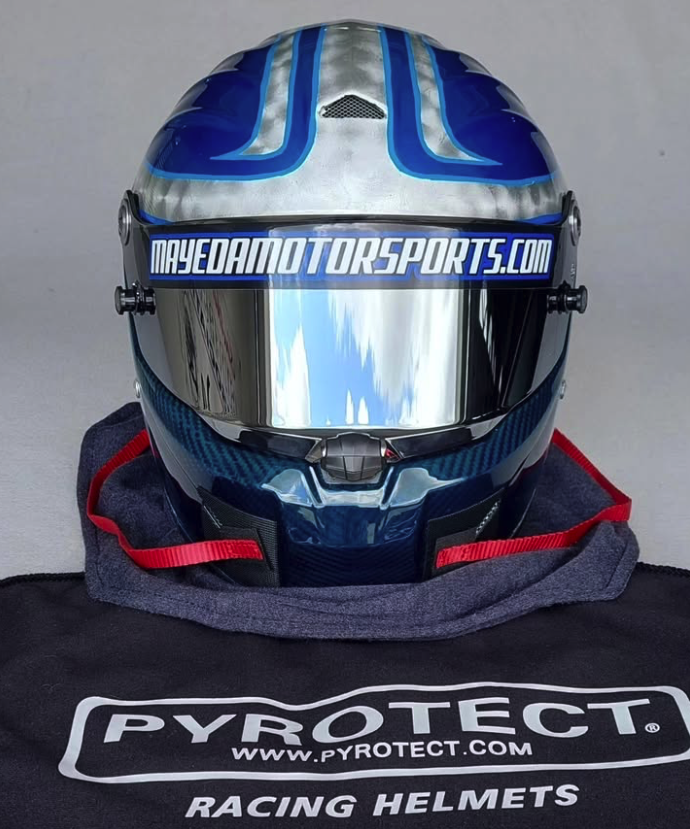
Keeping your helmet shield (visor) completely down and locked while driving a race car is the single most critical defense against catastrophic facial injuries, blindness, and fire inhalation.
Keeping your helmet shield up might be tempting, but doing so at speed introduces massive, unnecessary risk for life-altering injuries. Whether you are a track day enthusiast or a seasoned racer, closing and locking your ballistic-grade visor before hitting the track is a safety protocol that cannot be compromised.
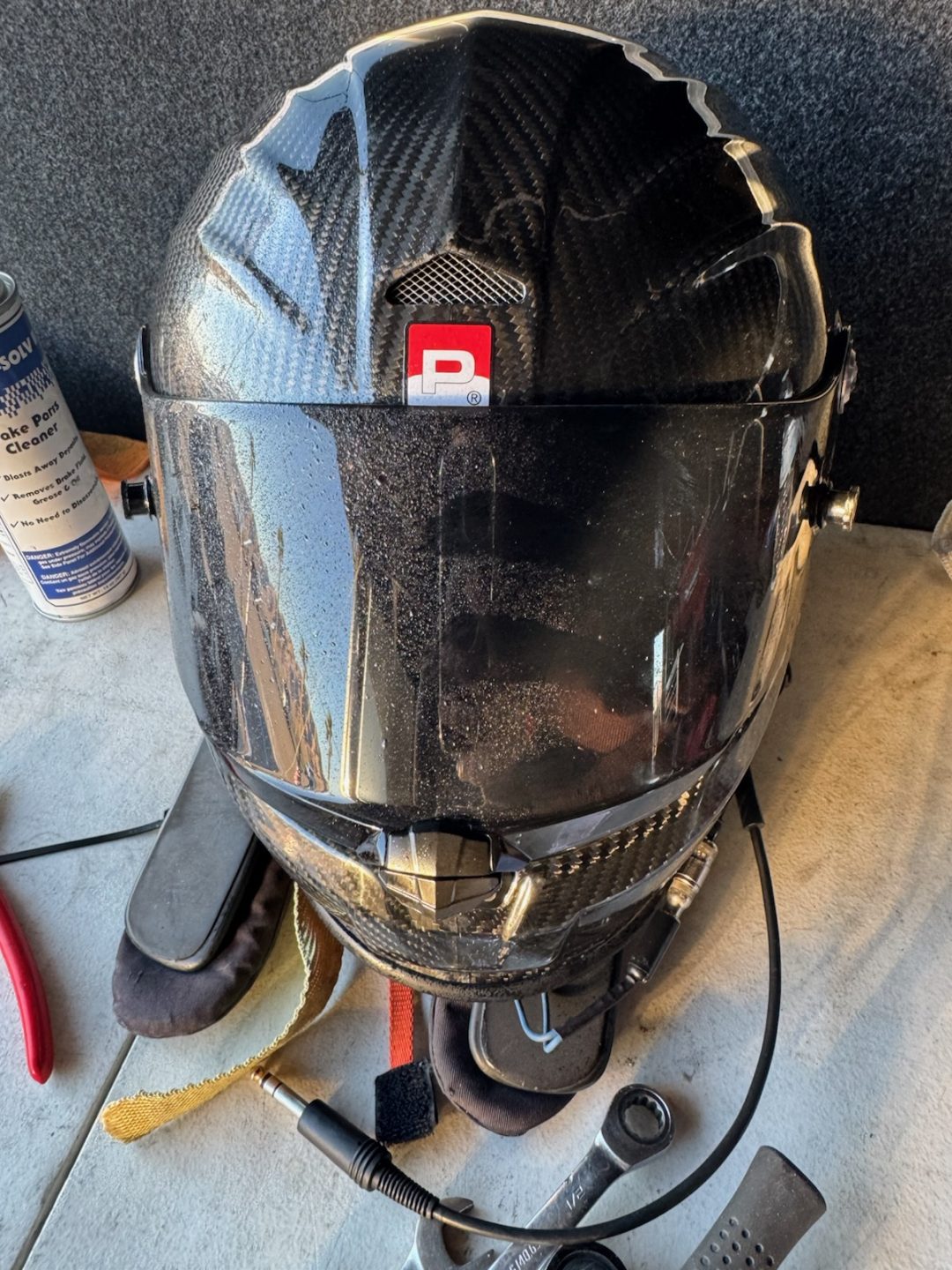
The Eyeport Firewall: SA-rated racing helmets feature tight eyeports, but a raised visor leaves your face completely exposed to instant, high-pressure flash fires, flying debris, blinding wind and chemicals. A locked visor acts as a literal firewall, giving you the precious seconds needed to activate your fire suppression system, stop safely, and extricate yourself from the car.
Why is this important? Extreme speeds and mechanical component failures go hand-in-hand right in front of or behind the driver.
- Engine Failures: If a supercharger blows or an engine lets go, metal shrapnel, burning oil, and fuel can spray directly into the cockpit.
- Chemicals and Oil: A lowered visor keeps these materials out of your eyes and, in the case of open cockpit circle track or sports car racing, you can utilize visor tear-offs, but only if the visor is down to being with. When oil or grime smudges your view during an endurance stint, peeling a layer away restores instant visual clarity.
Ballistic Debris and Rollovers: Racing speeds introduce other kinds of risks that a helmet shield is designed to protect against.
- Dust and Debris: Even at speeds of 5 mph, if wind enters the helmet, it can instantly impair driver’s vision. Combined with fine dirt or dust, together they act like high velocity sandpaper, potentially causing irreparable damage to the eyes. When parts on the track impact the car or cockpit, it can be considered a ballistic strike. These are especially critical for open cockpit or race cars without front windscreens.
- Windshield Breaches: While most race cars have windshields, a heavy impact from a loose wheel, hardware, or trackside debris can instantly shatter the screen and enter the cockpit at high very speed. Your helmet and shield are all that is protecting your face and head, at that point.
- Structural Integrity: In a rollover, vehicles can slide and tumble over great distances, and in land speed racing, it can even be miles. Modern helmets rely on a locked visor to complete the structural loop of the helmet shell. This prevents the helmet from warping or flexing inward under the immense, repeated forces of a violent crash.
Takeaway for All Racers
Whether you are chasing a personal best on the drag strip, aiming for a record on the salt flats, or fighting for a podium on a circle track or road course, a down and locked helmet shield is the only acceptable visor configuration. Protect your vision, secure your helmet’s integrity, and give yourself a fighting chance by keeping your shield closed.