
When discussing motorsport safety, attention tends to center on the driver suit and helmet: multi-layer race suits, Snell-certified helmets, and SFI-38.1 head and neck restraints. However, seasoned drivers and safety engineers know that relying solely on the driver suit is a critical miscalculation.
In a high-heat cockpit environment or a severe trackside fire, your baseline thermal protection envelope depends entirely on what you wear underneath.
At Mayeda Motorsports, we believe that true safety leadership means treating your gear as an interconnected safety system. Following our deep-dive reviews on racing suites, gloves, shoes, and helmet technology, we are breaking down why SFI and FIA certified fire-retardant innerwear and balaclavas (head socks) are non-negotiable for every grassroots and professional racer.
1. The Thermal Protective Performance (TPP) “Air Layer” Multiplier
Under standard sanctioning body guidelines, accessory fire resistance is measured via Thermal Protective Performance (TPP) ratings (SFI Spec 3.3 for accessories and SFI Spec 3.2A for suits). TPP quantifies the exact amount of thermal energy required to cause a second-degree skin burn:
Time to 2nd-Degree Burn (seconds) = TPP Rating / 2
- Single-Layer Configuration: A base single-layer driver suit (SFI 3.2A-1 or SFI-1) provides only 3 seconds of protection before heat transfer causes second-degree burns.
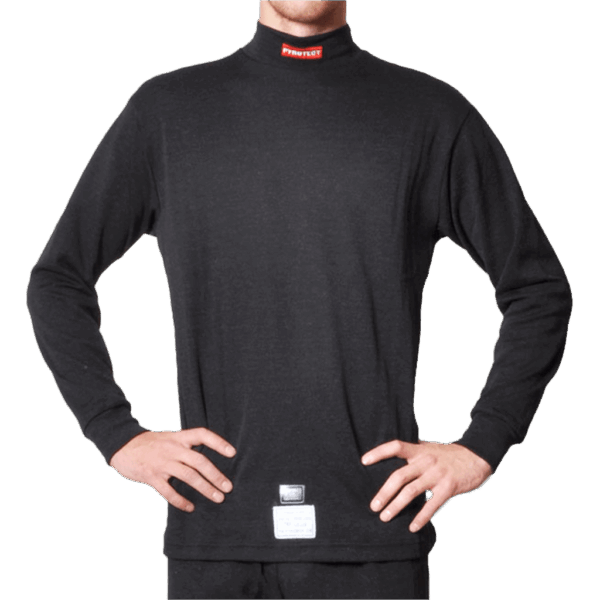
- The Dead-Air Gap Advantage: Adding a certified fire-retardant undergarment set (undergarment and balaclava) beneath your driver suit and helmet does more than add material thickness. It creates a trapped, dead-air thermal barrier between your skin and the outer suit layer.
- The Result: Layering certified innerwear dramatically increases your total TPP rating, effectively doubling your escape-time window and providing crucial seconds to unbuckle, drop the window net, and extract yourself safely.
2. Balaclavas (Head Socks): Defending the Facial Micro-Climate

Your helmet protects against blunt force and mechanical impact, but standard helmet comfort liners can transmit intense radiant heat during a flash fire. Furthermore, the visor aperture and neck collar interface can be exposure points (without a helmet skirt).
Critical Specs to Look For:
- Single vs. Double Layer SFI 3.3 / FIA Homologation: Premium head socks—such as 2-layer SFI 3.3/5 (10 seconds of protection) or FIA-rated (4-5 seconds of protection) headsocks use advanced aramid weaves to shield the face, nose, lips, and neck from flash burns.
- Respiration Safety: Inhaling superheated gases can instantly devastate lung tissue. High-spec Nomex balaclavas filter and slow thermal transfer around the airway.
- Ergonomics & Eyeport Design: Single-eyeport and dual-eyeport configurations help better position the helmet cheek pads over the driver’s head and face while creating a flame seal.
3. Material Science: Why Synthetic Athletic Gear is a Fatal Mistake
A common pitfall for grassroots track-day drivers is wearing moisture-wicking synthetic compression shirts (polyester, nylon, or spandex) under a race suit.
- The Melting Hazard: Synthetics have low melting points. When exposed to extreme cockpit heat, synthetic fibers melt and fuse directly into human skin, compounding thermal injuries.
- Aramid & Carbon-Resistant Weaves: Professional innerwear utilizes engineered aramid fibers (like Nomex) that carbonize and thicken under extreme heat. High-end modern weaves balance high TPP ratings with moisture management, keeping drivers cool and dry while maintaining 100% flame resistance.
4. The Often Overlooked Role of Nomex Socks
A fire suit is only as secure as its closure interfaces. Footwell fires often caused by hot fluids or fuel line breaches make the lower extremities exceptionally vulnerable.
- Coverage: Standard streetwear socks offer zero protection. SFI-rated Nomex socks extend high up the calf, ensuring complete overlap beneath pant cuffs and preventing skin exposure during aggressive pedal work or cockpit twisting.
Recommended Safety Upgrade Checklist
| Component | Industry Specification | Primary Safety Objective |
| Racing Balaclava / Head Sock | SFI 3.3 (1 or 2 Layer) / FIA 8856-2018 | Shields face, neck, and respiratory tract from flash heat. |
| Fire-Retardant Top & Bottoms | SFI 3.3 / FIA Approved Nomex Weave | Multiplies total TPP and prevents suit heat-soak. |
| Nomex Racing Socks | SFI 3.3 Approved High-Calf | Protects ankles and feet from footwell thermal spikes. |
Final Takeaway: Never Compromise on Your Personal Baseline Protection
Safety doesn’t take a day off, and neither should your personal protective envelope. Upgrading to certified fire-retardant innerwear (fire-retardant undergarments, balaclava, and socks) is one of the most cost-effective ways to exponentially expand your safety margin on track.
Explore our full selection of professional-grade innerwear, head socks, and driver safety systems to optimize your setup before your next race weekend: https://mayedamotorsports.com/product-category/sfi-and-fia-undergarments/