
When building or updating a driver safety setup, most racers focus heavily on the gear worn directly on the body, as they should: helmets and their Snell ratings, driver suits that meet FIA and SFI thermal protective performance standards, SFI-38.1 HANS or Frontal Head Restraint devices, and 6- or even 7-point driver restraints. However, in violent rollovers, side impacts, or high-G barrel rolls, your personal safety equipment only does half the job.
Your limbs and head are just at risk thrown about inside and outside the cockpit envelope during an incident. That’s when catastrophic injuries occur.
At Mayeda Motorsports, we treat driver safety as an integrated, multi-layered system. Following our deep dives into helmets, driver suits, innerwear, and racing harnesses, this installment of our Crucial Protection Series examines the final physical barrier holding the driver safely within the roll cage: Cockpit Containment Systems.
1. The Systems Approach: Restraints vs. Containment
A common misunderstanding in racing is assuming a properly cinched 6-point harness and seat will keep a driver entirely within the chassis protection envelope. Rarely racing incidents are a singular, straight frontal impact. Most often, racing collisions involve multi-directional forces upon the driver.
- Primary Driver Restraints (The Harness): Anchors the torso and pelvis tightly to the seat structure, managing longitudinal (front/rear) and vertical deceleration forces.
- Secondary Containment (Nets & Arm Restraints): Manages lateral (side-to-side) displacement and extremity movement. During rapid centrifugal rotation or multi-axis rollovers, flailing arms and head displacement can move outside the tubing of the main roll cage unless physical barriers prevent it.
- Frontal Head Restraint (FHS) or HANS Device: A properly designed FHS prevents dangerous head movement during a multi-impact crash by mechanically coupling the driver’s helmet to the driver’s torso, forcing the head and body to decelerate together in a controlled manner, reducing neck load and tension by about 80%. Modern FHR designs utilize a continuous sliding tether that routes freely through the back of the collar and connects to helmet anchor posts. While this allows normal side-to-side head turning during driving, during angled impacts, the opposite-side tether locks under tension to prevent the head from twisting violently or whipping diagonally across the cockpit.
By viewing containment as an extension of your harness system, you eliminate dangerous “gaps” in your safety envelope.
2. Enclosed Cockpit Cars: Window Nets & SFI-27.1 / SFI-3.3
2. Enclosed Cockpit Cars: Window Nets & SFI-27.1 / SFI-3.3
In GT, touring, stock car, drag, land speed, and sports car racing, the primary threat during a side impact or rollover is driver head or arm displacement through the door or window.
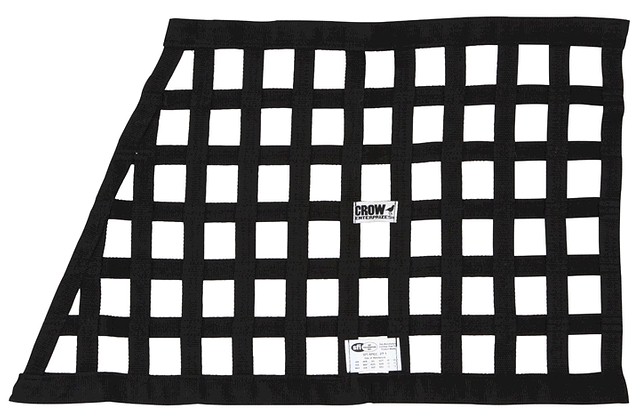
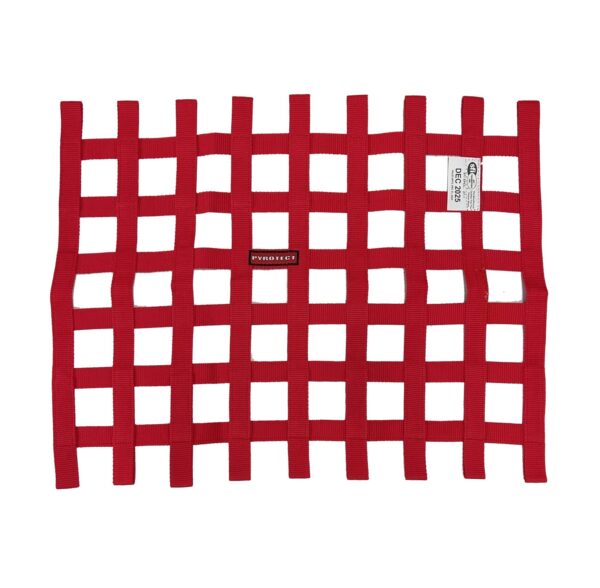
SFI-27.1 (Window Nets)
- Testing & Certification: SFI-27.1 governs mesh and ribbon-style window nets. Nets undergo rigorous drop-ball and tensile testing to guarantee they will not fail under heavy dynamic loads or tear when impacted by debris.
- Ribbon vs. Mesh Construction:
- Ribbon Nets: Built from high-strength 1”-wide polyester webbing. They offer maximum durability and good visibility while resisting tears from jagged metal or fiberglass.
- Ribbon/Mesh Nets: Combination of wider-spaced 1”-wide polyester webbing and mesh material provide excellent coverage against smaller flying track debris and a little higher side visibility. Check with your racing organizing body and/or rulebook.
- Quick-Release Mounting Hardware: A window net is only as safe as its release mechanism. Intuitive push-button buckle or latch & link quick-release mechanisms mounted at the top-front of the net is essential for both the driver and safety crews to access. In an emergency, safety crews or a disoriented driver must be able to release the net with a single motion using gloved hands.
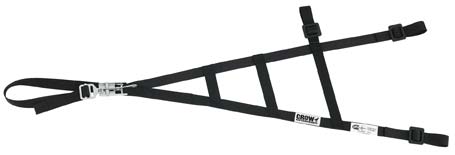
Center Containment Triangular Nets (SFI-37.1)
In modern road, circle, and sports car racing, a driver side, or left-side window net is only half the equation. High-G right-side impacts cause the driver’s upper body and helmet to excessively flex laterally in both directions. Running secondary triangular center containment nets between the driver seat and the center console or door opening helps to anchor the upper torso, arms, and head within the vehicle’s safety envelope.
3. Open Cockpit Cars: Arm Restraints & SFI Spec 3.3
In open-wheel (formula cars, sprint cars, midgets) and open-cockpit sports racers/off-road vehicles, window nets are often impractical or structurally impossible to mount. Without a full door and frame structure, arm containment relies entirely on a tethered arm restraint system.
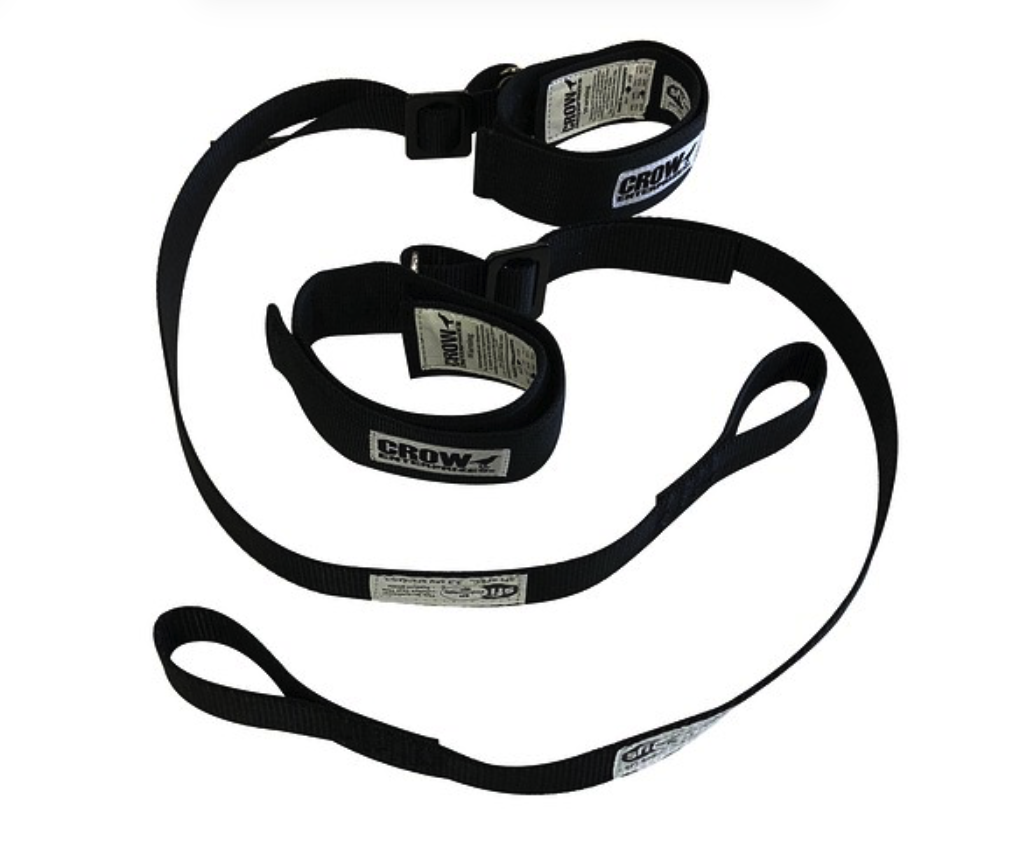
How SFI 3.3 Arm Restraints Work
- Tether Attachment: SFI-3.3 certified arm restraints consist of adjustable padded cuffs worn around the forearms or upper arms, connected via heavy-duty webbing tethers.
- Integration with the Harness: The lower rings of the tethers slide directly onto the lap belt transportation lugs or release pin of your SFI-16.1/16.5 or FIA camlock buckle before it is latched.
- Tether Length Calibration: Arm restraints must be adjusted so the driver has full, unhindered range of motion to turn the steering wheel lock-to-lock and reach dashboard switches, but short enough to prevent the hands or elbows from extending past the plane of the top roll cage hoop during a flip.
Equipment Requirements: Enclosed vs. Open Cockpits
| Safety Component | Enclosed Cockpit (GT / Sedan / Drag / Stock) | Open Cockpit (Formula / Sprint / Drag / Off-Road) |
| Primary Physical Barrier | SFI-27.1 Window Net | SFI-3.3 Arm Restraint Systems |
| Secondary/Lasteral Barrier | Center Containment Net (SFI-37.1) | High-Booster Seat Halos / Head Surrounds |
| Release Mechanism | Top-front quick-release latch rod or push-button | Integrated directly into 5/6-point harness camlock |
| Sanctioning Body Focus | SCCA, NASA, IMSA, USAC, NHRA, IHRA, SCTA | IndyCar, USAC, World of Outlaws, SCORE, NHRA, IHRA, SCTA |
4. Inspection, Maintenance, and Expiration Standards
Like harnesses, cockpit containment hardware degrades over time due to UV exposure, cockpit heat, dirt, and sweat.
- SFI Expiration Dates: SFI-27.1 window nets typically carry a 2-year expiration interval from the date of manufacture stamped on the SFI tag. Replace sun-faded or frayed nets immediately, as UV degradation weakens web tensile strength significantly.
- Hardware Audits: Periodically inspect mounting hinges, quick-release latches, and seat belt ring ends for rust, bent pins, or binding should be a part of your regular race car maintenance. Lubricate latches with dry graphite spray rather than wet oils, which attract dirt and pit sand.
The Final Step in Your Safety System
Your helmet, suit, and harness form the foundation of your protection, but proper containment gear ensures you stay inside the safety structure when violent dynamic forces take over. Matching the right SFI-27.1 net or SFI-3.3 arm restraint system to your chassis type completes your personal containment loop.
Need help selecting the correct window and lateral containment nets, mounting hardware, or arm restraints for your race car? Explore our full lineup of driver safety systems at Mayeda Motorsports: https://mayedamotorsports.com/product-category/window-containment-nets/